
Vocal Warm-Ups Before Singing, a 5-Minute Daily Routine
A cold voice can feel stiff, crack on high notes or run short of air. A few minutes of vocal warm-ups before singing help your voice ease in and move more freely. Here is a 5-minute routine for every day, a longer version for performance days, and the most common mistakes with their fixes.
Why warm up your voice
Your voice comes from two small folds in your throat, the vocal folds, which vibrate as air from your lungs passes between them. They stretch longer and thinner for high notes and get shorter and thicker for low ones. Singing uses far more of that range than speaking, so if speaking is a walk, singing is a sprint. Just as runners stretch first, a warm-up readies the muscles that make your voice, so it tends to move more easily from note to note. Like stretching, it works best a little every day.
The 5-minute routine at a glance
The routine has five steps of about a minute each, from easiest to hardest. Start in the easy lower middle of your voice and let it climb as it warms.

Minute 1, body and breath
Stand tall but not stiff, with your shoulders relaxed and down. Lean to one side, then the other. Fold forward, then clasp your hands behind you and draw your shoulder blades together. Twist each way and roll your head slowly in a circle. Massage your jaw with your fingertips, from just in front of your ears down toward your chin and back up to your temples.
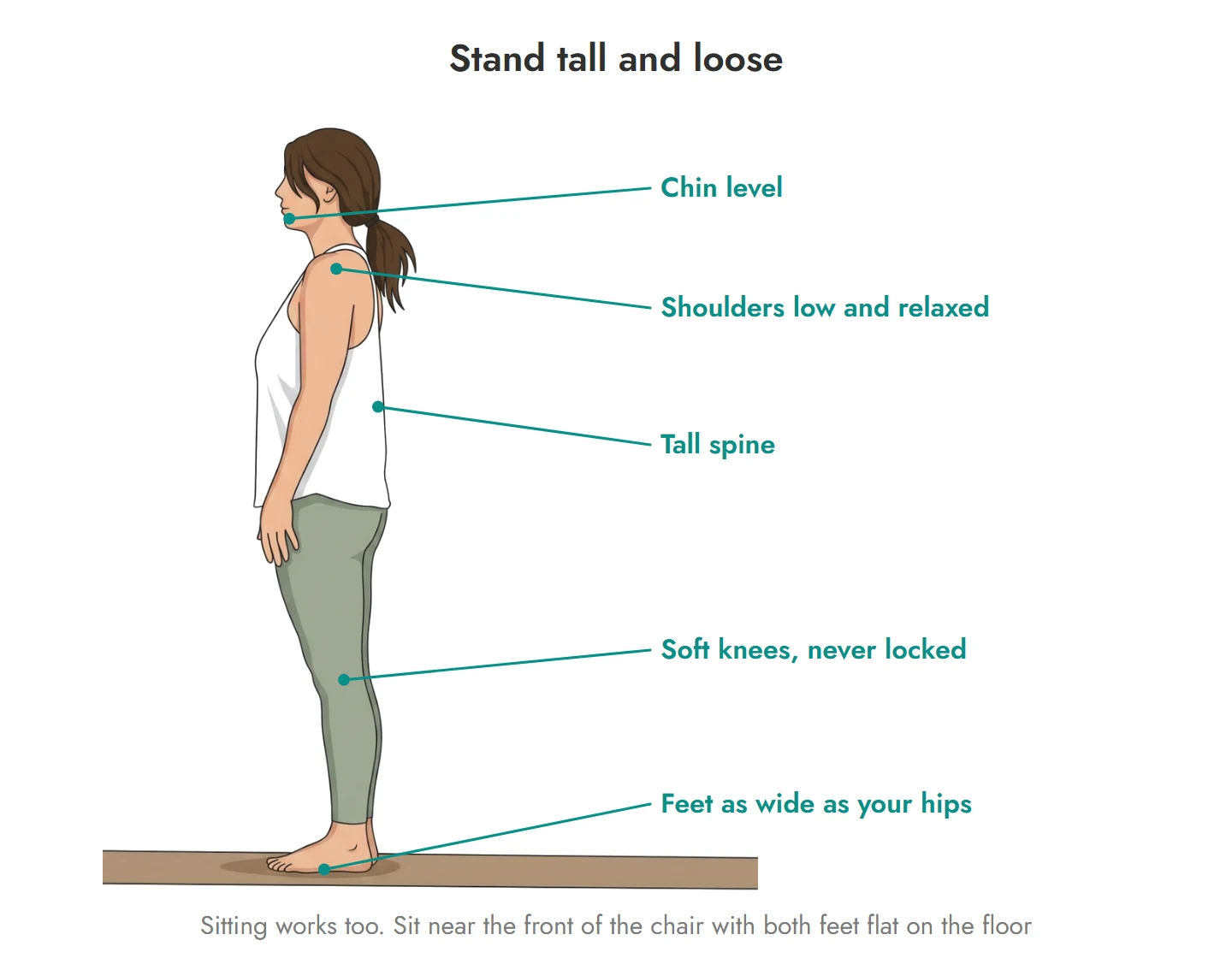
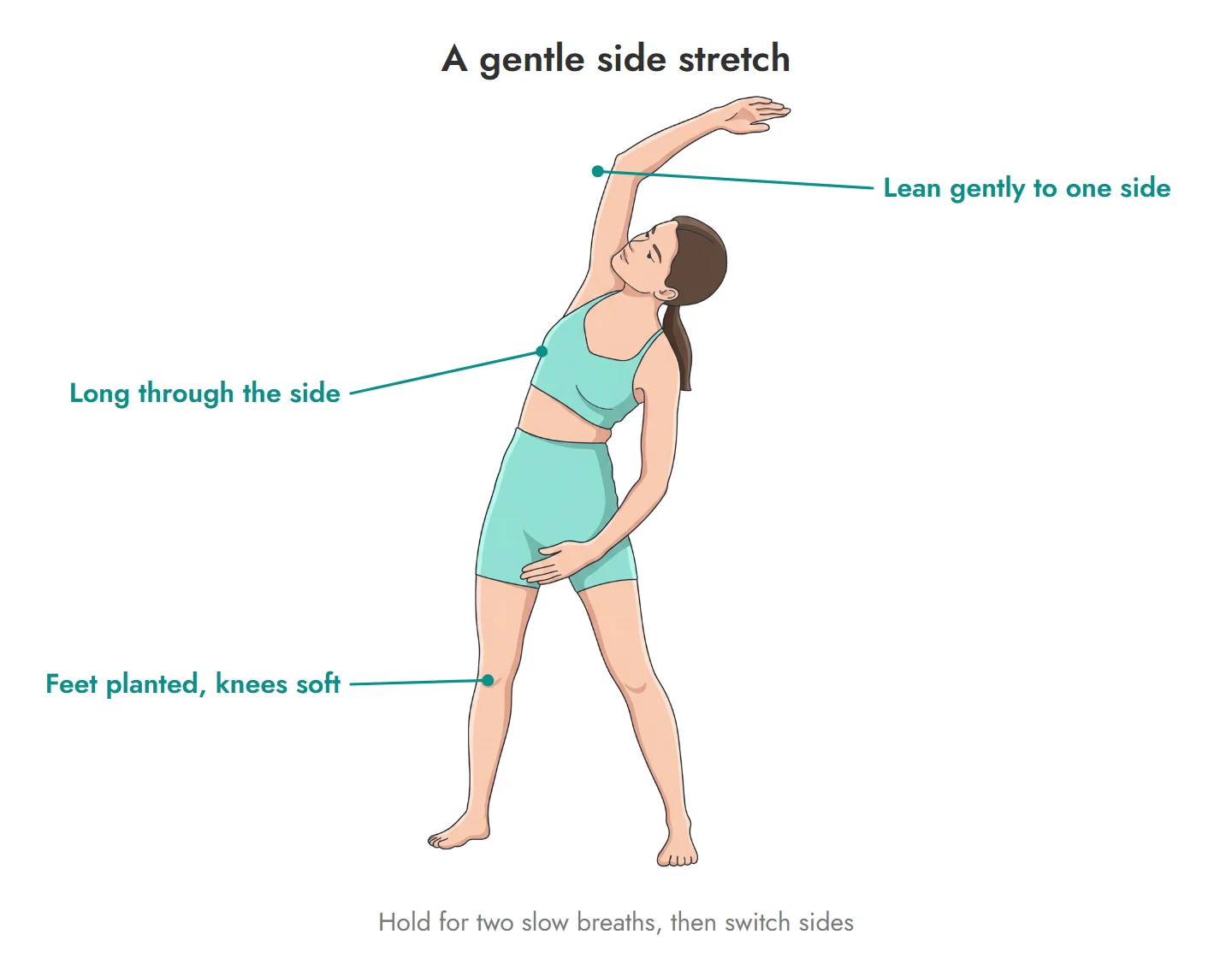
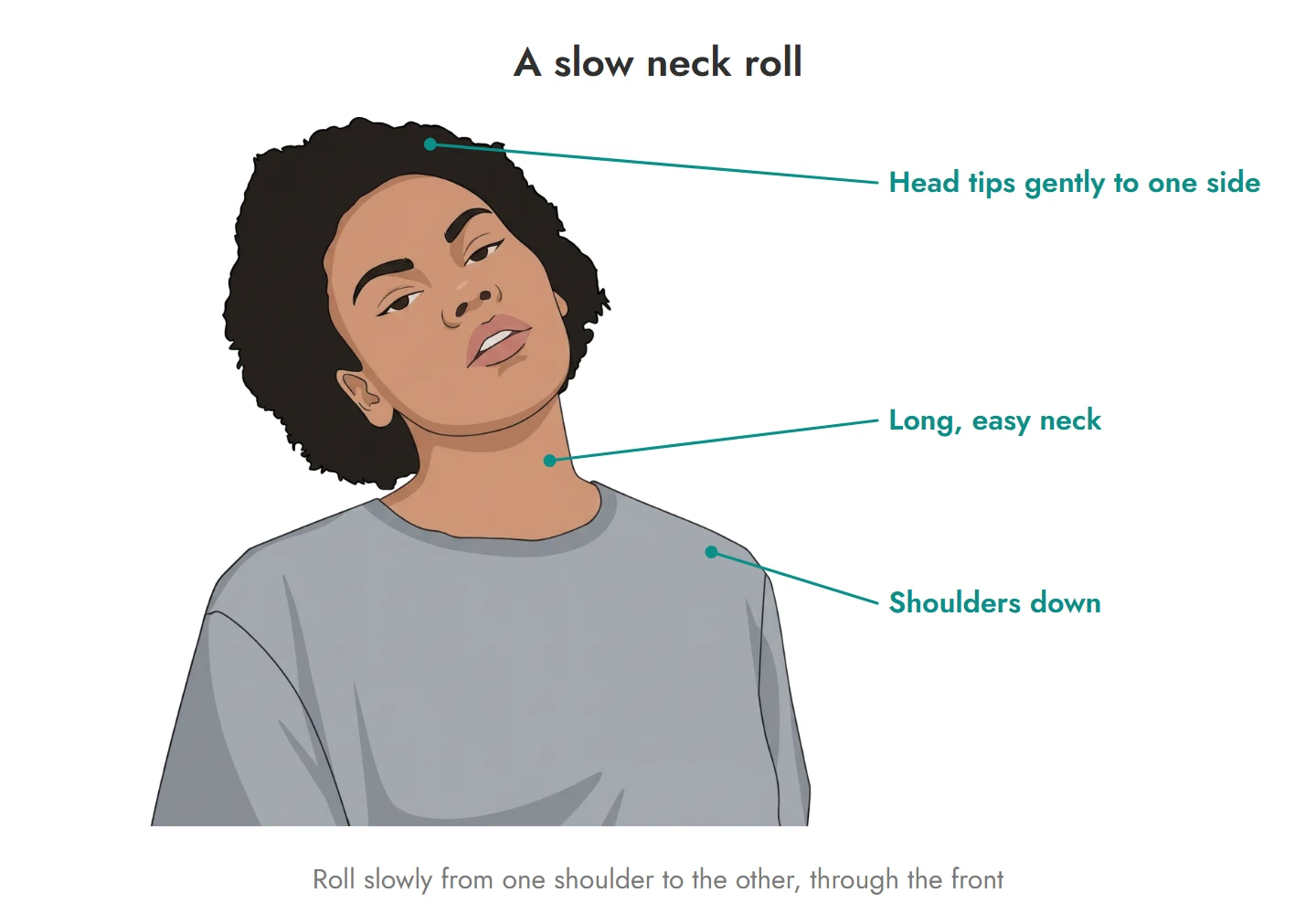
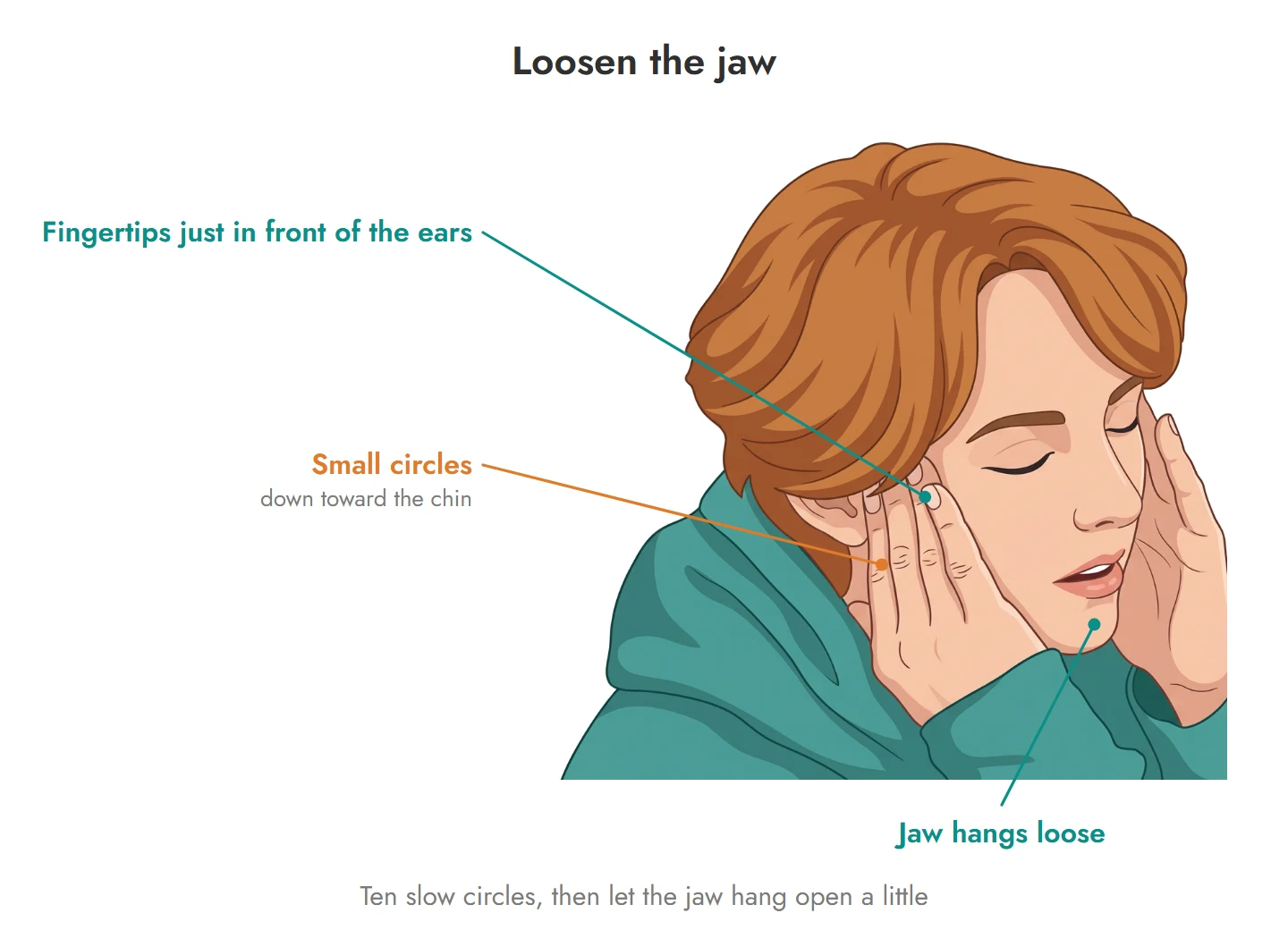
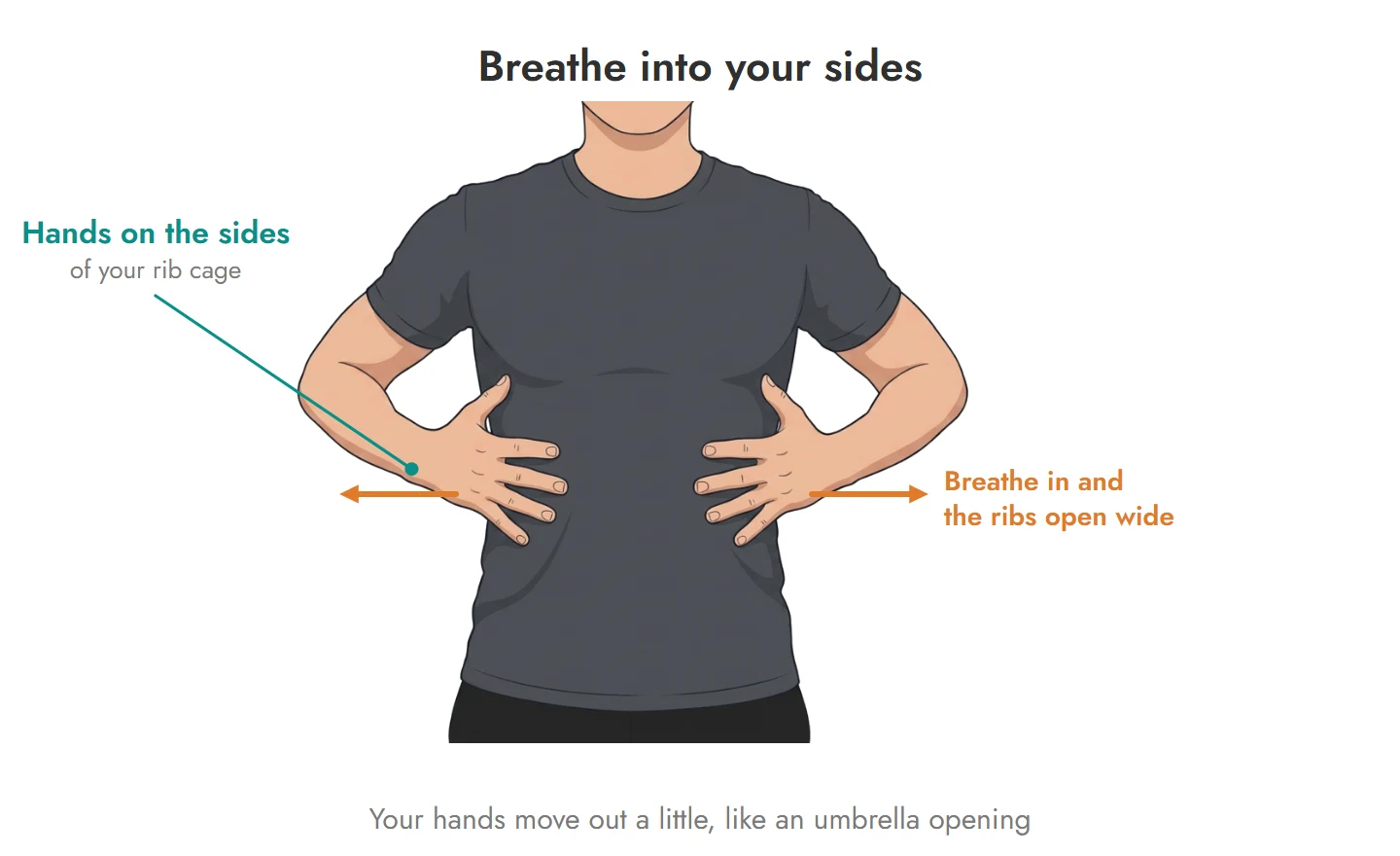
Then rest your hands on the sides of your ribs. Keep your shoulders still and your belly relaxed, and breathe low and wide so your hands move out a little. Breathe in for 4 counts and let the air out on a small, steady "sss" for 8. A quiet hiss saves air. For more, read How to Breathe When You Sing.
Minute 2, hums and lip trills
Hum five notes up and back, 1, 2, 3, 2, 1, as in Example 1. Rest your lips together loosely with a little space between your back teeth. Feel for a light buzz around your nose and face, not in your throat. After a few rounds, each a half step higher, sing it on a tall, long "ah", not a wide one.

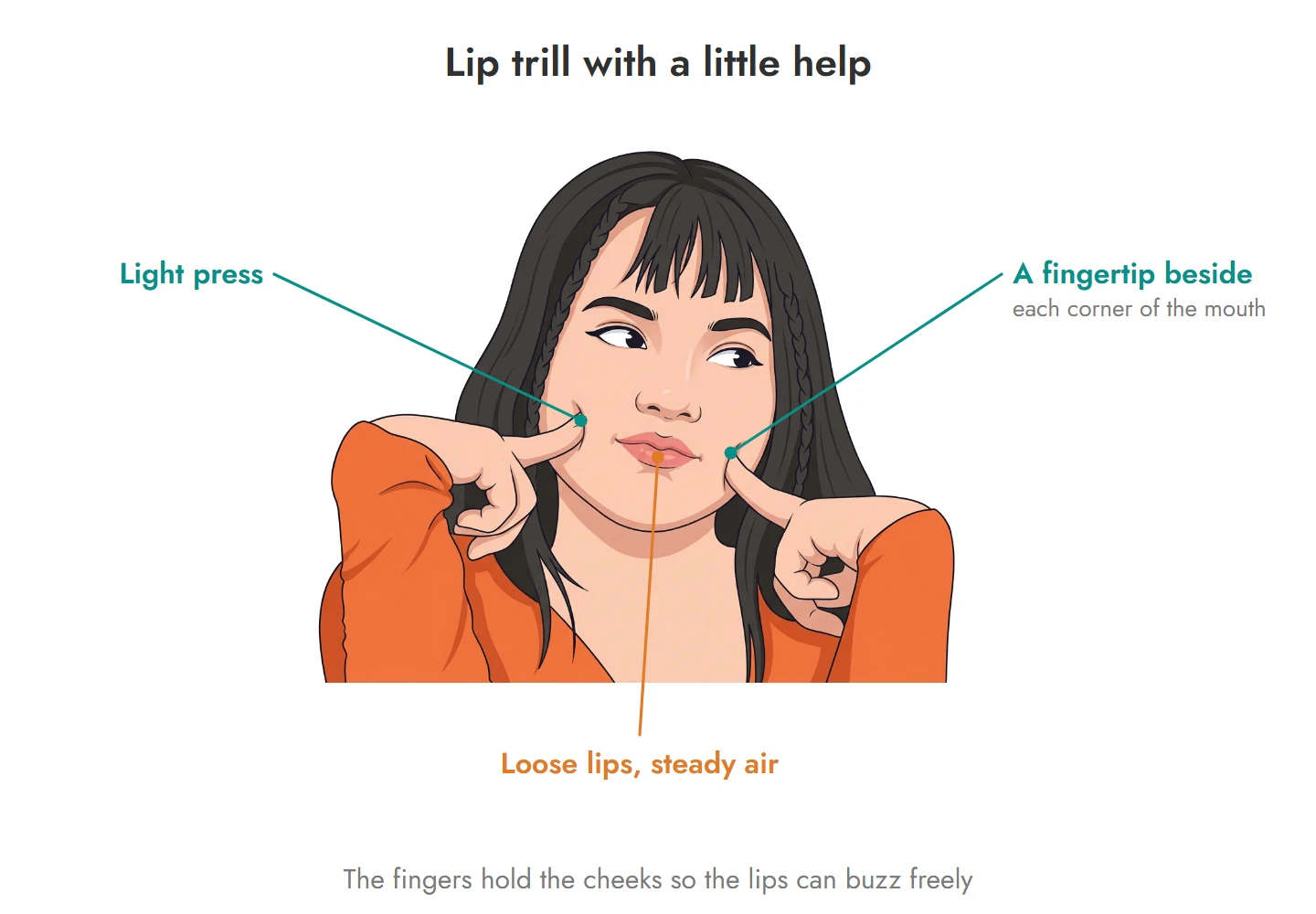
For the lip trill, take a big, easy breath first. Let loose lips flutter on "brr" and slide from 1 up to 5 and back on one breath, as in Example 2. Lip trills take pressure off the voice, so many singers reach a few notes higher on a trill than on "ah".

Minute 3, sirens and slides
A siren is one smooth slide from low to high and back. Slide on "oo", "ah" or the "ng" of sing, and make the way down as long as the way up. Somewhere in the middle the voice may flip or crack, where your chest voice hands over to your head voice. Slow down there and keep the air flowing, as if ironing out a wrinkle. If the voice flips into a light head voice up high, let it.

Minute 4, five-note scales on vowels
Sing "yah" down five notes, as in Example 3, starting each round a half step lower, as far down as feels easy. Then sing "yah" on do, mi, sol and back, as in Example 4, a half step higher each round. Check in after each one. Still easy, or getting tight? Drop your jaw a little more as the notes rise, and if a pattern feels tight, try it on "ee", "oo" or a lip trill.


Finish with short, bouncy "ha" notes, as in Example 5. Each one should feel like a laugh, with a bounce just above your navel from the belly and rib muscles. If you feel nothing there, add a firmer "h". Keep your throat open.

Minute 5, a few lines of your song
Sing the pattern of Example 4 in your song's key so your ear knows where do sits. Hum the first note of the song, then sing a few lines at an easy volume, then once more with full voice.
The longer version before a performance
On a show or audition day, about 20 minutes is a good aim. If time is short, 10 to 15 minutes still helps, and even 5 minutes of lip trills backstage or in the car beats nothing. Use the same steps, each a little longer. Finish within about 30 minutes of singing, since a voice warmed up hours earlier cools down. Right before you go on, loosen your shoulders and jaw and take a few slow breaths, in through your nose and out through your mouth, to help you settle.

High notes without strain
When a high note cracks, it is tempting to open the mouth wide and push, which usually makes it breathy or strained. Try these steps on the highest note of your song, 3 to 5 times each. 1. Sing the note on the "ng" of sing, so the sound goes through your nose. Aim for a bright buzz. It does not have to sound pretty. 2. Keep that buzz and slowly open to "ng-ah". 3. Sing the word itself on that note with the same feeling.

Think of a smile in the back of your throat, with the space tall inside, not wide at the lips. Once the vowel opens, the sound should no longer be nasal. Another way in is to lip trill up to the high note, then open into "ah" without a new breath.
Stop at the first sign of strain, squeezing or pain. Warming up comfortably to your top note day after day is what moves it higher. If singing hurts, or your voice stays hoarse for more than two or three weeks, check with a doctor.
Common mistakes and how to fix them
1. Starting loud or high. Begin with quiet hums and let the voice climb. 2. Clenched teeth or pressed lips. Leave a little space between the back teeth. 3. Wide, smiling vowels. Keep them tall, shaped inside the mouth. 4. Pushing for a higher note. Stop at the first tightness and switch to "ee", "oo" or a lip trill. 5. Shoulders that rise on the breath. Keep them down and breathe into your ribs. 6. Rushing past the spot where the voice changes. Slow the siren down there. 7. Warming up hours before a show. Finish within about 30 minutes of singing. 8. One long warm-up a week. A few minutes every day does much more.
Put it all together
Each exercise is a little harder than the last. They sit in a comfortable middle range in treble clef, so move them up or down by half steps, or an octave, to fit your voice. Breathe at each check mark and stop if anything feels tight.
Exercise 1 hums up and back, then sings five vowels down the scale.

Exercise 2 adds the lip trill slide, do, mi, sol and a full octave.

Exercise 3 trills over an octave on one breath, bounces on "ha", opens a high "ng" into "ah" and ends with a short melody on "la".

It always comes down to practicing
Whatever routine you choose, it always comes down to practicing. At All Around Music we think of learning as about 80 percent practice and 20 percent instruction. A lesson's job is to give you what you need to practice well on your own, because most progress happens in the days between. With us, every lesson is recorded and can be rewatched for 30 days in Playback, with a practice list beside it.
Questions singers ask
How long should I warm up before singing Five minutes is a good minimum for busy days and for kids. With more time, 10 to 20 minutes covers more of your range.
What if I cannot do lip trills
Press a fingertip lightly into each cheek beside the corners of your mouth, use less lip pressure and keep the air steady. Meanwhile, sing the pattern on a hum. Some voices feel tense on lip trills, so use what feels free for you.
Should I drink water before singing
Yes, and sip it through the whole day too. Staying well hydrated helps your vocal folds work well.
Can kids do these warm-ups
Yes, in a shorter, gentler form, with lip trills like blowing bubbles and sirens like a fire truck. For more, read Singing Lessons for Kids, What Age to Start.
Start low, go slowly, and let your voice climb as it warms. At All Around Music, every teacher is rigorously vetted, and our voice teachers start students from age 5, in styles from pop and musical theater to opera, jazz and Disney. Lessons are live and one-on-one in AAM Studio, our lesson room built for music. Find your teacher on our voice page.
Sources
NIDCD (National Institutes of Health), Hoarseness NIDCD (National Institutes of Health), Taking Care of Your Voice MedlinePlus (US National Library of Medicine), Hoarseness University of Alabama at Birmingham, Protect your voice, expert tips to keep your vocal cords strong and healthy Hull University Teaching Hospitals NHS Trust, Your Voice and How To Look After It Royal Berkshire NHS Foundation Trust, Voice warm up and warm down NHS, Breathing exercises for stress Wikipedia, Vocal folds PMC (US National Library of Medicine), Cause-effect relationship between vocal fold physiology and voice production in a three-dimensional phonation model PMC (US National Library of Medicine), Cricothyroid Approximation Surgery (Type IV Thyroplasty) Wikipedia, Vocal warm up