
Head Voice vs Chest Voice, What They Are and How to Find Your Mix
If your voice flips, cracks or strains as a song climbs, you are feeling the change between chest voice and head voice. Here is what each one is, why the voice cracks between them, and simple exercises to find your head voice, find your mix and smooth the switch.
Chest voice and head voice
Chest voice is the strong, fuller sound you use when you talk, so it feels familiar. Head voice is the higher, lighter, clearer sound above it, like the floaty sound of a princess song in an animated film. Both are the same voice used two ways. In chest voice the vocal folds are thicker and more of each fold vibrates, which gives the heavier sound. In head voice the folds lengthen and thin and less of each fold vibrates, so the sound gets lighter.
How each one feels
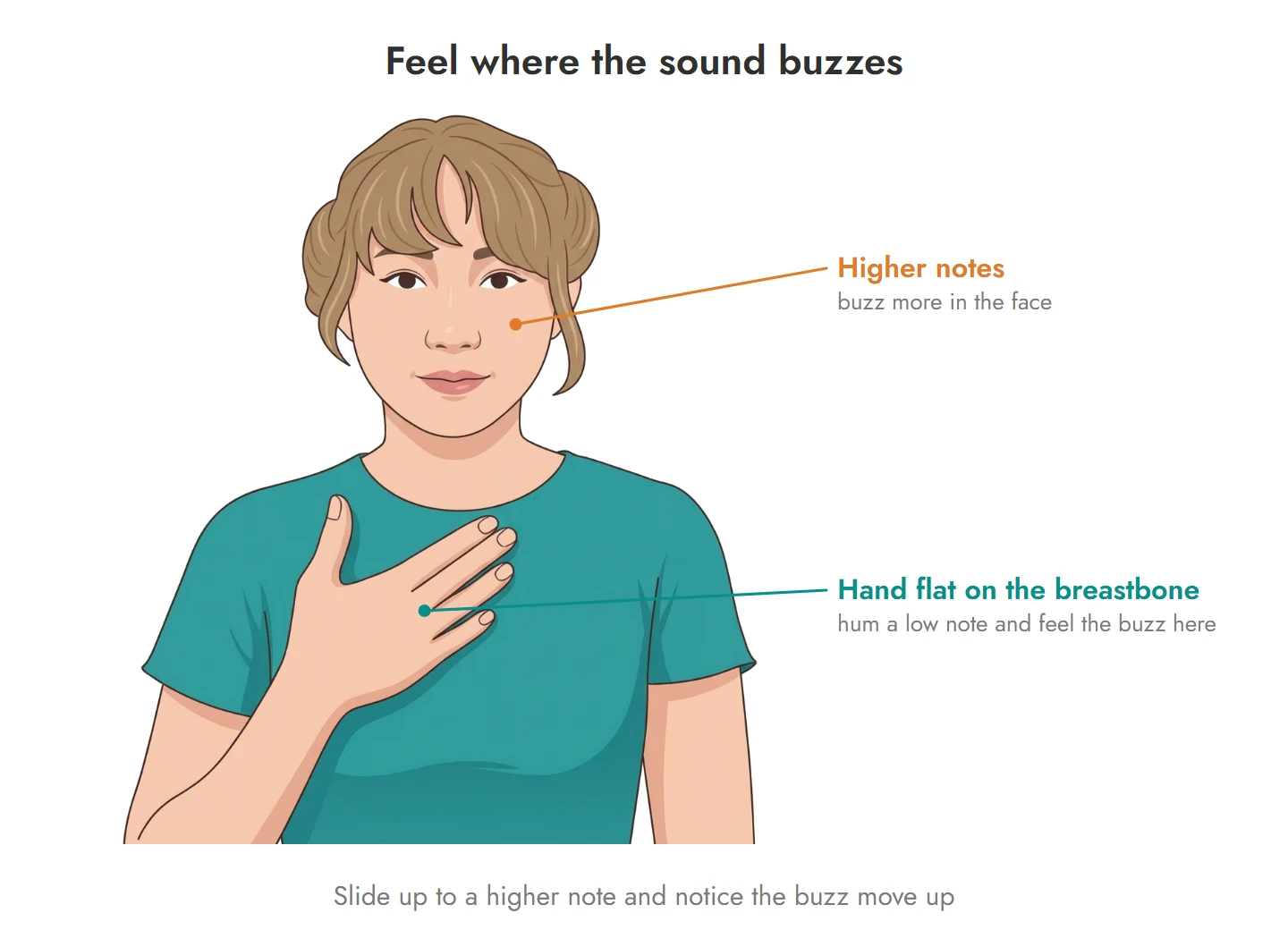
Hum a low note with a hand flat on your breastbone, and the buzz under your hand is chest voice. On higher notes the buzz moves into your face, behind your nose and around your eyes. These buzzes help you tell the two apart, but the sound itself starts in your vocal folds, not in your chest or head.

What a mix is
A mix blends some of the strength and speech-like sound of chest voice with the ease of head voice. Many singers and voice teachers describe it as a blend of the two rather than a third voice, and the names change from method to method. A head-leaning mix is mostly head voice with a bright, buzzy, forward sound, so it can sound strong without the weight of full chest voice. A chest-leaning mix carries more chest quality higher and usually takes longer to build.

Falsetto vs head voice
Falsetto is the lightest sound of all. Only the thin edges of the folds vibrate, and they often do not close all the way, so it tends to sound airy. In head voice more of each fold stays at work, so it sounds fuller and less airy, even when soft. People use these words in different ways, so focus on the sound you want and whether it feels easy.
Why the voice flips or cracks
As you sing higher, the voice naturally wants to switch into head voice, and that flip is normal. A crack happens when the voice changes from one way of vibrating to the other all at once instead of gradually. This area is often called the break, or passaggio, and where it sits differs from voice to voice. Two habits make it worse, pushing chest voice higher until it strains, and hesitating or backing off at the last moment.
How to find your head voice
Make an excited "woo!" up high, like cheering at a game. Whatever comes out up there is head voice. Then sing a soft, light "hey" up high. Next, slide on "hoo" from high to low like an owl, as in Example 1, keeping the light sound as long as you can. Notice where chest voice wants to come in.

Lip trills help too, and many singers reach several notes higher on a trill than on an open vowel. In Example 2, trill up on "brr", then open into "ah" on the top note without a new breath. Aim for light and easy, not pretty. For a full routine, read Vocal Warm-Ups Before Singing, a 5-Minute Daily Routine.

Head voice is usually quiet and weak at first. It grows stronger only by being used, so sing in it every day.
How to find your mix
Bratty, whiny sounds are a quick way in. Sing "nay" down five notes as in Example 3, like a complaining child, bright and a little nasal, with the same brightness on every note. Then take away the whine and keep the buzz in the same place.

Chest quality is easiest to find in speech. Say "hey" as if calling to a friend across the yard, then sing it on Example 4 with the same spoken feel. Do the same with a line of your song. Speak it, speak it in rhythm, then sing it as if speaking on pitch.

The mix often feels wobbly at first, because it is new. Lean into that unstable spot instead of backing away, since backing away tends to make it crack.
Get lighter as you go up
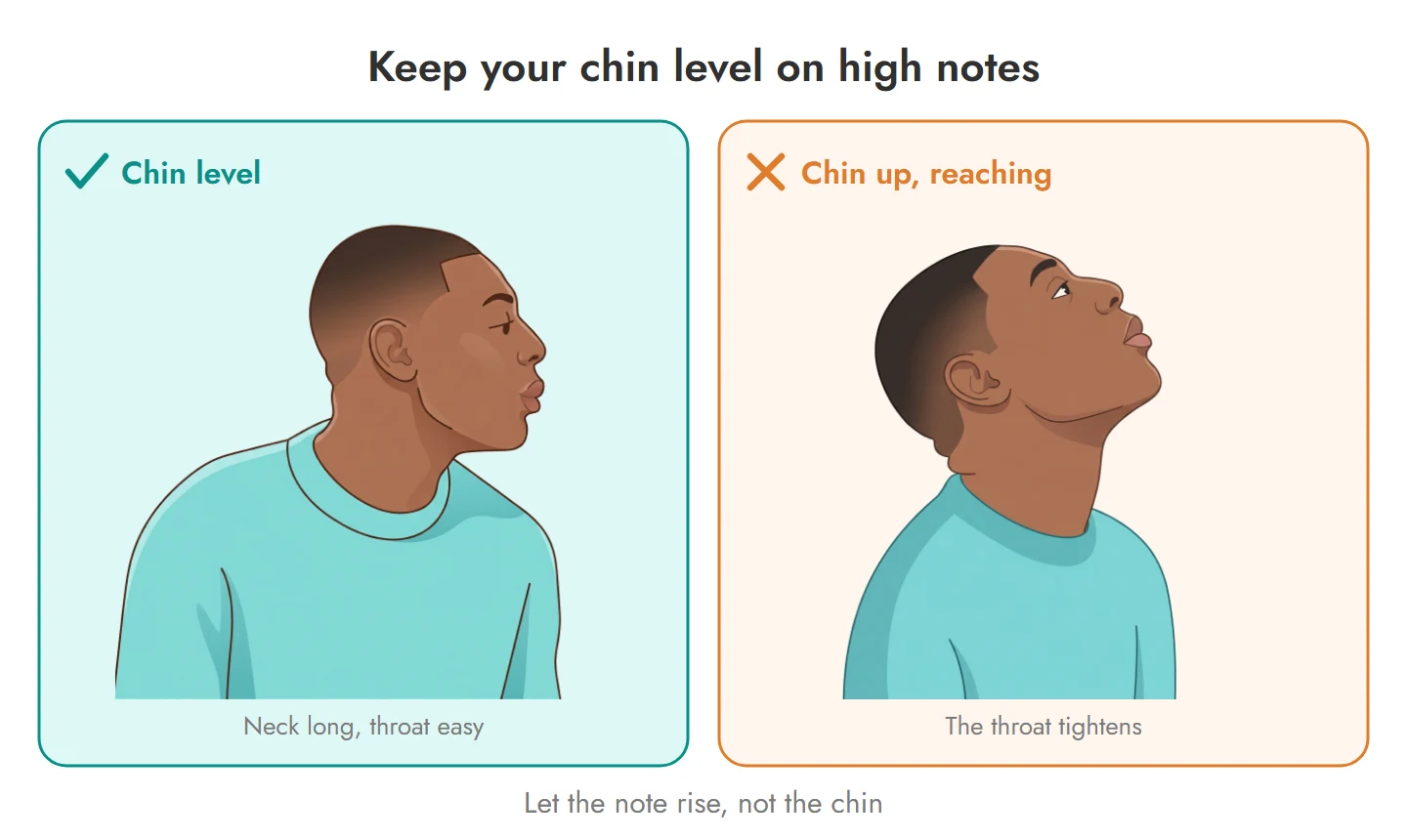
Stretch upward without getting louder. Try about 4 out of 10 in volume while keeping your belly and rib muscles engaged, and pitches often get more accurate. If it feels easier, you are usually on the right track. For support, try short "ha" bounces like a belly laugh, and read How to Breathe When You Sing. Keep your chin level, picture the high note right in front of you, and throw it forward like a ball instead of reaching up for it.
Smoothing the switch in songs
Map the song first, marking which words are chest voice and which are head voice. Then practice each switch with a pause before the flip, shorten the pause, connect it, and bring it up to tempo, as Example 5 does with one leap.


Coming back down into chest voice is often the harder direction, so use a breath spot to come back in on chest voice. Repeat just the few words around the hardest switch, or sing the phrase on "na" before putting the words back. If you miss a flip, switch late rather than push the rest of the phrase. And if a passage sits comfortably in chest voice, stay there.
Belting, in plain terms
A belt is a big, bright, speech-like sound, common in musical theater and pop. A belt-like sound can come from a bright head voice, a mix or chest voice, so it is not all or nothing. Build a confident head voice and a stronger low chest voice first, then the mix, then higher belting. A secure, easy head voice often sounds better than a tight belt, even when the original recording belts. If a belt feels tight or hurts, go lighter.

Common mistakes and how to fix them
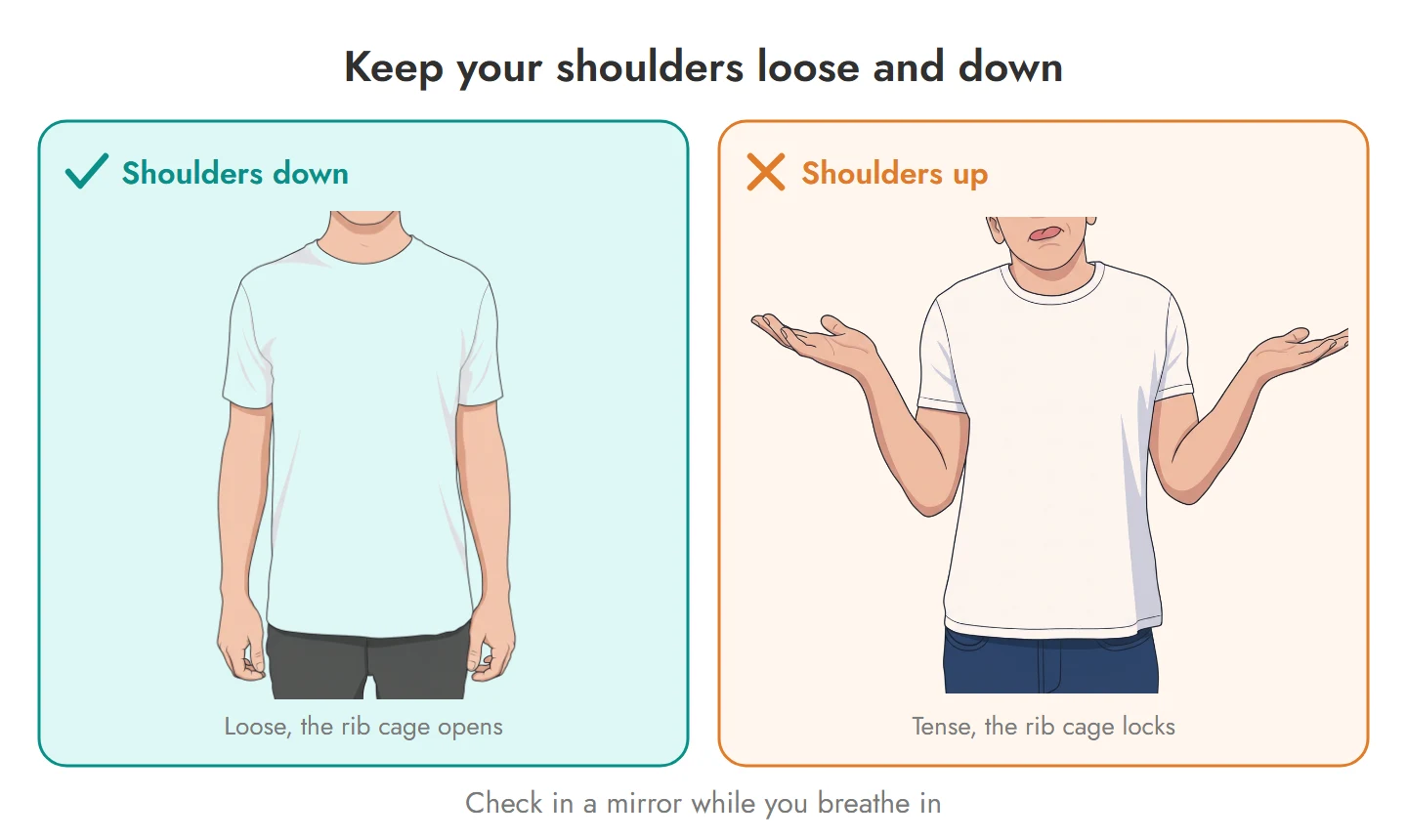
1. Pushing chest voice up until it strains. Let head voice take over, or mix. 2. Getting louder as the notes rise. Stretch up at the same volume. 3. Hesitating before a high note. Hear it, breathe, then throw it forward. 4. Lifting the chin. Keep it level, with the note in front of you. 5. A tight jaw, face or shoulders. Let them hang loose. 6. Missing the return to chest voice. Plan it on the lyrics.
Put it all together
These exercises get longer and harder each time. They sit in a comfortable middle range in treble clef, so move them by half steps to fit your voice, or down an octave for a lower voice. A line between notes is a slide, "brr" is a lip trill, and a check mark is a breath or short pause.
Exercise 1 slides down on "hoo", then sings a bratty "nay".

Exercise 2 adds the lip trill, the spoken "hey" and the flip with pauses.

Exercise 3 adds a "goo" scale on one breath, quick flips with no pauses and a short melody on "na".

It always comes down to practicing
A few minutes every day does more than one long session a week, and a mix often takes months to settle. At All Around Music we think of learning as about 80 percent practice and 20 percent instruction, so a lesson's job is to give you what you need to practice well. Every lesson is recorded and can be rewatched for 30 days in Playback, with a practice list beside it.
Questions singers ask
Here are short answers to a few common questions.
Is falsetto the same as head voice
Not quite. Falsetto is lighter and airier, made mostly by the thin edges of the folds, while head voice keeps more of each fold at work.
Why does my voice crack when I sing high
Usually it switches all at once, often after pushing chest voice too high or backing off. Practicing the switch slowly, with a pause and then without, helps smooth it.
Is belting bad for your voice
An easy, free belt is part of many styles. Loud singing for a long time can leave anyone hoarse, so rest a tired voice. If singing hurts or hoarseness lasts more than about three weeks, check with a doctor.
Should kids belt
Young singers do well with a lighter sound at a lower volume, which keeps pitches accurate. For more, read Singing Lessons for Kids, What Age to Start.
Let the flip happen and stay light on top. At All Around Music, every teacher is rigorously vetted, and our voice teachers start students from age 5, in styles from pop and musical theater to opera, classical, jazz and Disney. Lessons are live and one-on-one in AAM Studio, built to carry voices clearly. Find your teacher on our voice page.
Sources
Wikipedia, Vocal register Wikipedia, Chest voice Wikipedia, Head voice Wikipedia, Falsetto Wikipedia, Passaggio National Center for Voice and Speech, Voluntary Register Changes PMC (US National Library of Medicine), Imaging vocal fold medial surface vibration across chest, head, whistle, and creaky voice production using optical coherence tomography PMC (US National Library of Medicine), Aerodynamic and acoustic effects of abrupt frequency changes in excised larynges PubMed (US National Library of Medicine), Laryngeal vibratory mechanisms, the notion of vocal register revisited NIDCD (National Institutes of Health), Hoarseness MedlinePlus (US National Library of Medicine), Hoarseness