
How to Get Over Stage Fright Before a Recital or Performance
A racing heart, shaky hands and a mind that goes blank are common worries before a recital, a concert or an audition. Nerves are normal, and you can prepare for them. Here is a plan for the weeks before, the day of, the minute before you start, what to do if you slip, and how parents can help.
Why nerves happen
When you perform, your body treats the moment as important. It releases adrenaline, part of the fight-or-flight response, so your heart beats faster, you breathe more quickly, your muscles tense, and your hands may shake or sweat. Your mouth can feel dry too. This is your body getting ready, not a sign that something will go wrong.

Under that rush, many performers slip into autopilot, which tends to do what you have practiced most. That is the main reason to practice performing, not only the piece.
Nerves are normal
Performance nerves are common among musicians at every level, professionals included. They show that the performance matters to you. The aim is not zero nerves but feeling nervous and still playing or singing well, and both can happen at once.
Nerves and excitement feel alike in the body, so one simple idea to try is telling yourself "I am excited" when the racing feeling starts. Studies of this idea have found benefits, and in one set of studies, people who said it before singing or speaking performed better. Feeling underprepared makes nerves worse, and preparation makes them easier to manage.

The weeks before
Practicing a piece and practicing performing it are two different jobs, so do both.
The clean-run test
Play or sing the piece from start to finish without stopping, and count the run only if it is clean. When you can do that two or three times in a row, you have earned the right to tell yourself it is ready. If a run has a slip, fix that spot and start the count again.

Fix mistakes in practice
In practice, stop at a mistake, fix it, then go on. A spot that comes out right only once or twice out of many tries is likely to slip under pressure. Play each hard spot slowly until you have five good repetitions, where a try with a mistake does not count. Aim for practice that is almost always right, so a slip on stage is the rare exception.
Make your memory hold up
Make sure your memory does not rest on your fingers alone. Play the piece from memory very slowly. If you get stuck, look at the music, name the chord or pattern there, such as a C major chord or a scale going up, play that spot slowly three times, then test again. Singers can practice with the lyrics out of sight instead of on a screen.

Hold mock performances
At least once a week, do a run exactly as you will on the day. Ask a parent, a friend or your teacher to play the judge, and start with one listener before building up to a few. 1. Walk in and stand or sit where you will on the day. 2. Introduce yourself and say what you will perform. 3. Take a second, then perform it without stopping. 4. Name one or two things that went well and one to work on. 5. Repeat it two or three times.

Rehearse with the exact setup
Practice with the backing track or accompanist you will have. Singers used to singing along with the original recording are often thrown by the instrumental track, so switch to it early, and learn its introduction, breaks, any key change and its ending. Rehearse in the shoes and outfit you will wear, in the position you will perform in.

Record a run and listen back
In the final weeks, record a full run-through, listen back more than once for rushing or spots that are too loud, and change one or two things in the next run. With All Around Music, every lesson is recorded and can be rewatched for 30 days in Playback, with a practice list beside it, so a run-through in a lesson is easy to watch back.
The day of
Drink plenty of water and sleep well the night before. For an evening performance, finish your meal about an hour before. If you can, arrive early enough to find your spot, check the setup and warm up without rushing.
Singers can aim for 15 to 20 minutes of warm-up, finishing within about half an hour of singing, in the car if there is no warm-up room. For a full routine, read Vocal Warm-Ups Before Singing, a 5-Minute Daily Routine. Pianists can warm up their hands, arms and whole body.
Then shake out the jitters. Lean side to side, fold forward, twist each way, roll your neck slowly and shake out your hands. Nervous muscles tighten, and stretching can help release that tension.

The minute before you start
Take a second and pick one or two things to think about, not ten. Hear your first note in your head before you sing, or set the tempo in your head before you play. Stand tall with your hands relaxed at your sides, or sit grounded on the piano bench with your feet on the floor.
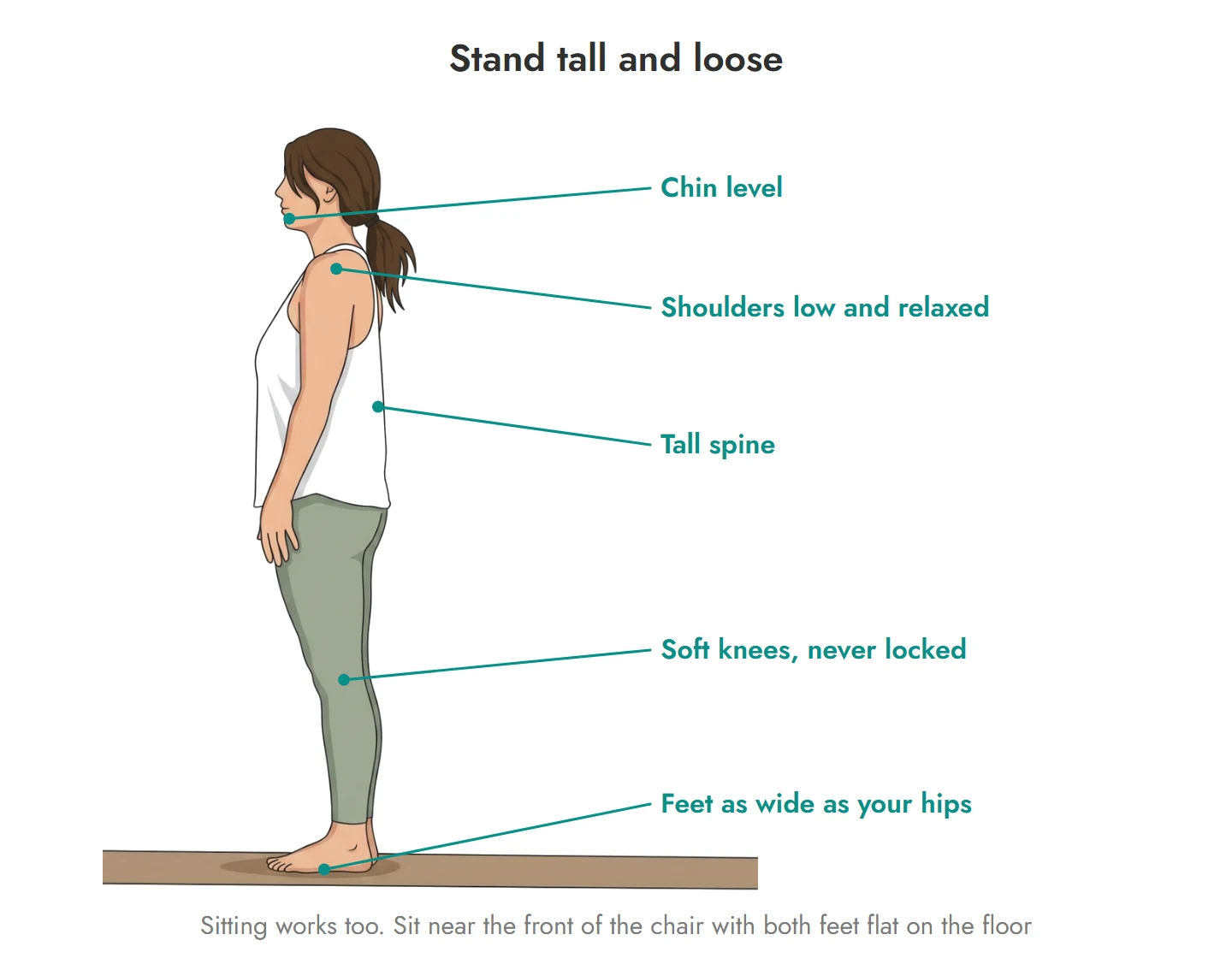
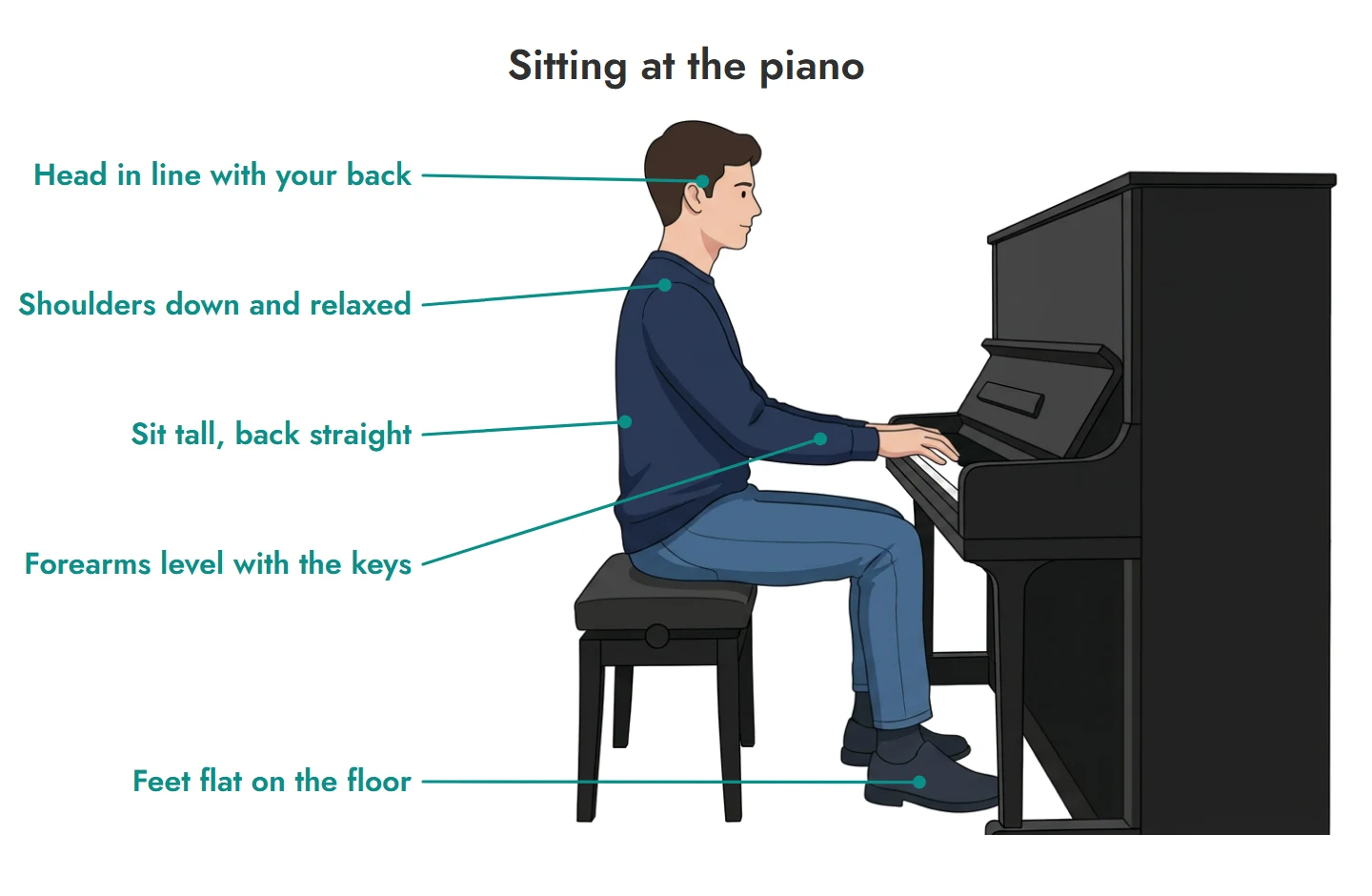
Take a few slow breaths, in through your nose and out through your mouth. Slow, deep breathing is one of the simplest ways to relax, and it can help calm your heart rate and breathing.

On stage, hold the tempo
Nerves push you to rush, so hold the tempo you set. Singers can get louder on a note they worry about, but high notes do not have to be loud. Pick one spot to sing to and keep your gaze there.
If you slip, keep going
If you miss a note, lose a word or come in early, carry on with the music. A small slip is often noticed only by the performer, and listeners tend to forget it within seconds. If you lose your place, aim for the next note you know, or jump back in at a spot you can find easily, such as the start of a phrase, the chorus or a long note. Practice starting from those spots ahead of time.

After the performance
Name one or two things that went well and one to work on, and bring any written comments to your next lesson. Treat yourself and rest a tired voice. Playing the piece once each practice session helps keep it secure.
How parents can help
Play the judge at home and give your child a small audience in the weeks before. Ask how the nerves feel instead of saying "don't be nervous", and let your child know that even professional musicians feel them. Younger children do well with simple tools, like a stretch, a smile and a parent as the pretend judge. Help with tracks, the music folder and getting there early, and afterward start with what went well. For more ideas, read How to Help Your Child Practice an Instrument at Home.

Common mistakes and how to fix them
1. Practicing the piece but never performing it. Hold mock runs with no stopping. 2. Playing past mistakes in practice. Stop and fix the spot. 3. Thinking of ten things before you start. Pick one or two. 4. Stopping after a slip in a performance run. Keep going. 5. Comparing yourself with a recording or another performer. Perform it your way.
It always comes down to practicing
However you prepare, it always comes down to practicing. At All Around Music we think of learning as about 80 percent practice and 20 percent instruction, and a lesson's job is to give you what you need to practice well on your own, performing included. Whether you are preparing a piano recital or a vocal solo, see how lessons work on our piano page and our voice page. In the final two weeks, a simple plan works well. 1. Each practice day, work the hard spots slowly and try the clean-run test. 2. Twice a week, hold a mock performance for someone at home. 3. Once a week, record a full run and listen back twice. 4. In the last few days, rehearse with the exact setup and go easy on a voice that is ready.

Questions performers and parents ask
Here are short answers to common questions.
Is it normal to be nervous before a recital
Yes. Performance nerves are common at every level, professionals included, and they show that the performance matters to you.
What should I do if I make a mistake while performing
Keep going. Aim for the next note you know, or jump back in at the next phrase.
How can I help my child with recital nerves
Play the judge at home, ask how the nerves feel, and help with the practical parts on the day.
When should I talk to someone about performance anxiety
If nerves feel overwhelming, keep you from performing or do not go away, talk with a doctor or counselor.
Nerves come with caring about the music, and a plan makes them easier to carry. At All Around Music, every teacher is rigorously vetted, and lessons are live and one-on-one in AAM Studio, our lesson room built for music, with practice notes to follow at home. Find out more about our online music lessons.
Sources
Wikipedia, Stage fright Harvard Health Publishing (Harvard Medical School), Understanding the stress response MedlinePlus (US National Library of Medicine), Stress and your health Journal of Affective Disorders (University of Iowa College of Medicine), The occurrence of performance anxiety among musicians PMC (US National Library of Medicine), Recent developments in coping strategies focusing on music performance anxiety, a systematic review PMC (US National Library of Medicine), Music performance anxiety, Insights from psychological science NCCIH (National Institutes of Health), Relaxation Techniques, What You Need To Know MedlinePlus (US National Library of Medicine), Relaxation techniques for stress Journal of Experimental Psychology, General, Get excited, reappraising pre-performance anxiety as excitement PMC (US National Library of Medicine), Mind over Matter, Reappraising Arousal Improves Cardiovascular and Cognitive Responses to Stress NIMH (National Institutes of Health), I'm So Stressed Out! Fact Sheet